Industry
Water Management
Challenge
Unlined concrete makeup-water tanks risked raising pH and releasing metals into sensitive saltwater systems. Aging structures and complex tank geometry made rehabilitation and installation planning difficult while downtime had to be minimized.
Results
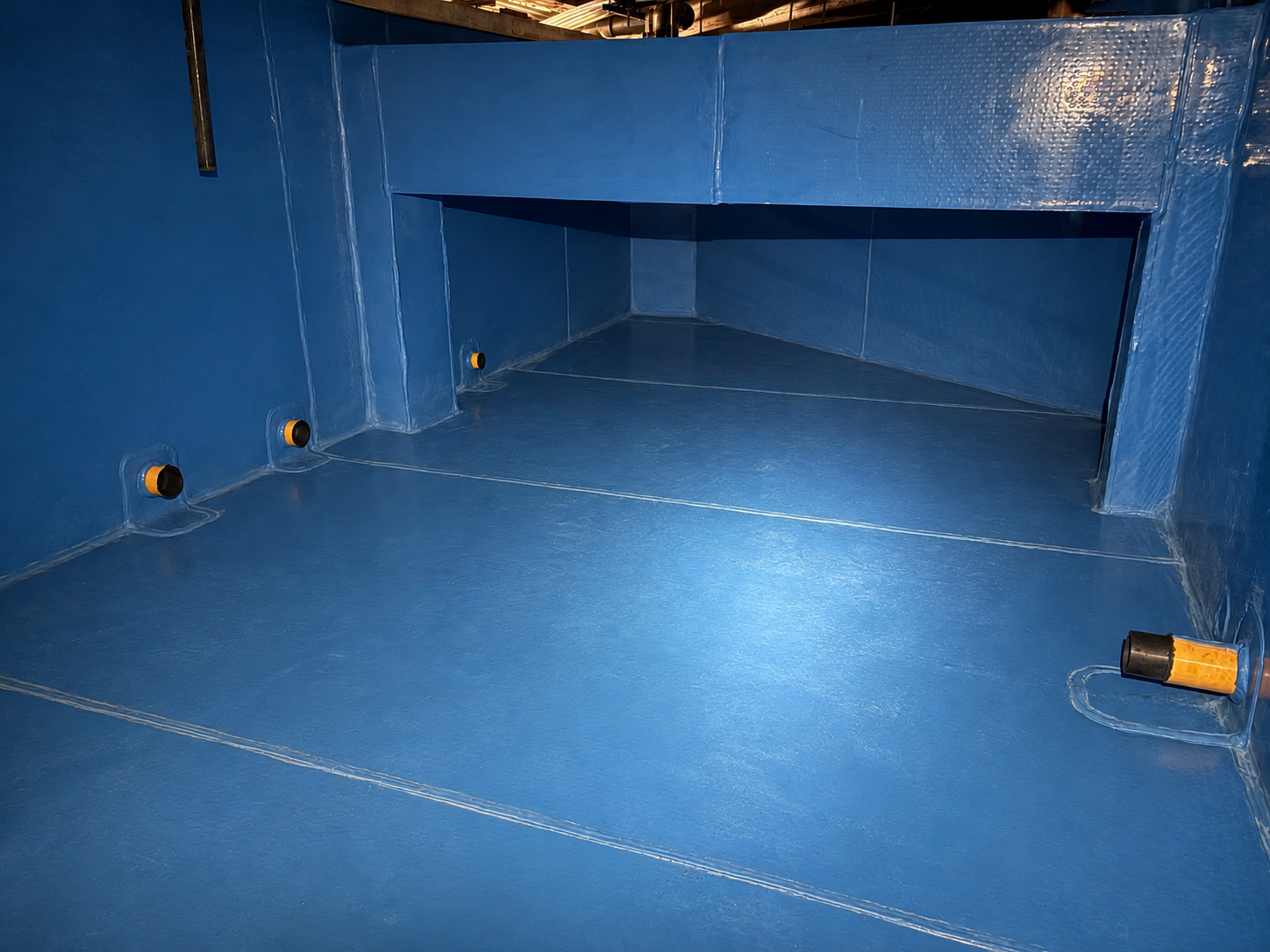
Titan used 3D LiDAR scanning and prefabricated HYDROCLICK® panels to create a continuous, inert HDPE barrier. Prefabrication reduced on-site installation time by several weeks and helped return the tanks to service sooner.
Key Product
Concrete Protection Liner
Location: Chicago, Illinois, USA
Project Type: 3D LiDAR scanning, panel layout design, prefabrication and material supply, and installation
Product Used: HYDROCLICK® Concrete Protection Liner
CHALLENGE:
|
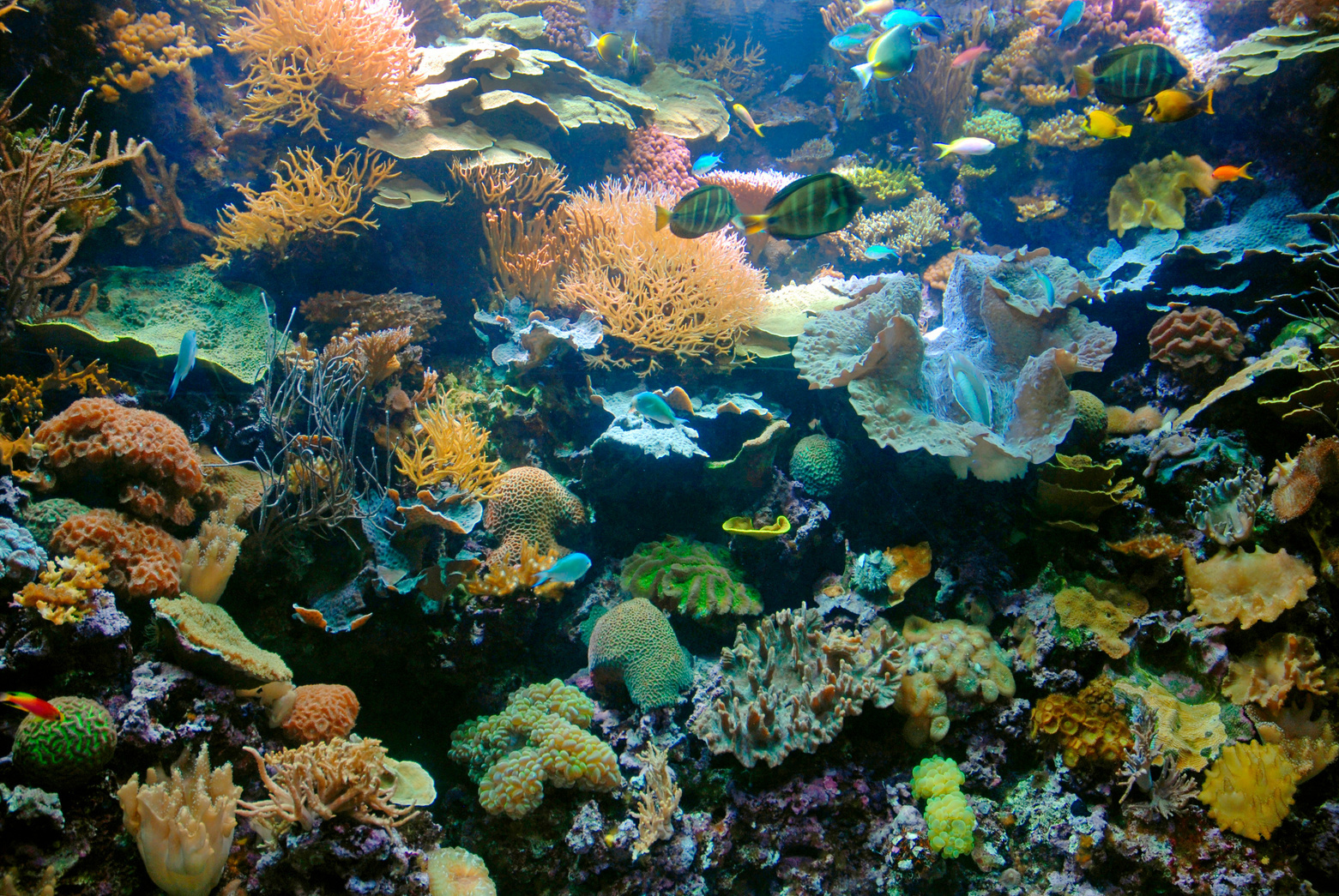
The Chicago Aquarium relied on aging, unlined concrete tanks as the primary make-up water source for its saltwater systems. These tanks support a wide range of aquatic life, including sharks, beluga whales, turtles, penguins, sea otters, seahorses, sea lions, jellyfish, octopuses, saltwater and freshwater fish, crustaceans and coral. With many of these animals vulnerable or endangered, stable water chemistry is essential to their care. When water comes into direct contact with untreated concrete, calcium hydroxide naturally leaches from the concrete, increasing the water’s pH to highly alkaline levels greater than 9. Such highly alkaline conditions can stress or harm aquatic organisms. Acid etching is commonly used to neutralize the calcium hydroxide and help stabilize pH in bare concrete tanks, but the process adds time, labor and cost to preparing a tank for service. The unlined concrete also required protection against deterioration. If concrete degrades and embedded steel reinforcement becomes exposed, corrosion can introduce metals into the water. This is a particular concern for sensitive marine invertebrates, including corals, anemones, octopuses, shrimp, sea urchins and clams. Downtime was another major consideration. Taking the tanks out of service meant relying on backup systems, so the rehabilitation needed to be completed as efficiently as possible. Inside the tanks, columns, beams, sumps, angled surfaces, corners and access points made accurate measurement and installation planning especially challenging. |
|
TITAN SOLUTION:
After assessing the tanks with the aquarium owner, HYDROCLICK® Concrete Protection Liner was recommended as a solution. Manufactured from high-density polyethylene (HDPE), HYDROCLICK® provides a protective barrier between the water and the underlying concrete. HDPE is inert and does not leach metals or other harmful substances into the water, and the liner does not affect water pH or alkalinity.
A key advantage for aquaculture facilities is that the lining system eliminates the need for the acid etching process typically used to neutralize calcium hydroxide in bare concrete tanks. By removing this preparation step, HYDROCLICK® can help reduce the time, labor and associated cost required to prepare tanks for service.
|
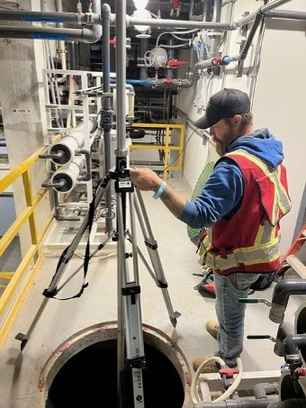
3D Lidar Scanning: To accurately capture each tank's complex geometry, Titan used 3D LiDAR scanning combined with photogrammetry software. The scanned data was processed using point-cloud technology, which organizes millions of data points in a three-dimensional coordinate system (X, Y and Z). The resulting digital models captured the tanks' dimensions, geometry and surface areas, including their corners, columns, beams, sumps, angled surfaces and access points. Compared with conventional measuring methods, this approach provided a more efficient and reliable basis for design and installation planning. Titan used the models to map the placement of each liner panel and develop a detailed installation layout.
|
|
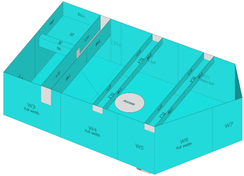
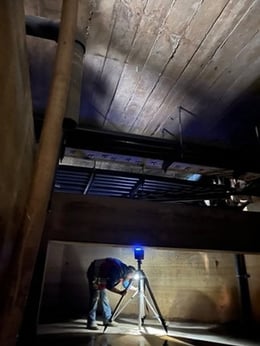
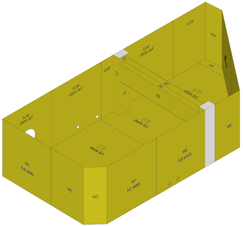
|
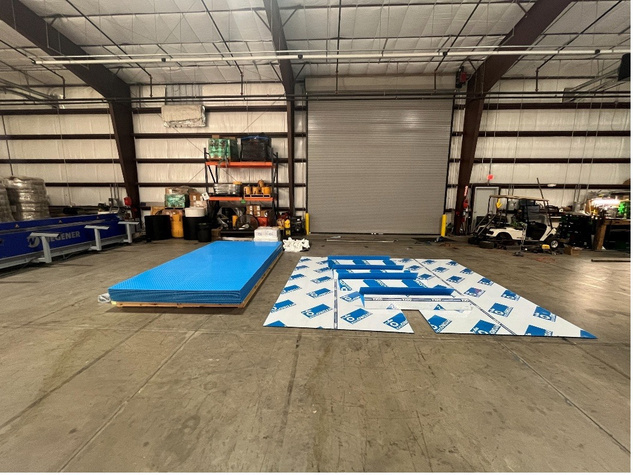
Prefabrication: Titan sent the finalized panel design to its fabrication facility in Houston, Texas. There, the panels were custom cut, labeled and numbered before being shipped to the site with a detailed installation layout. Titan's construction division completed the installation. Prefabricating the panels off-site reduced the amount of material handling and fabrication required inside the confined tanks. This streamlined the work in a space where room to maneuver was limited and helped reduce on-site installation time by several weeks. Conventional geosynthetic lining systems may require the liner to be placed on forms and encapsulated with grout, work that can be labor-intensive and difficult to carry out in confined spaces. Spray-applied coatings can require extensive surface preparation, including sandblasting or hydro blasting, as well as substrate drying, dehumidification, ventilation and controls for vapors and volatile organic compounds. |
|
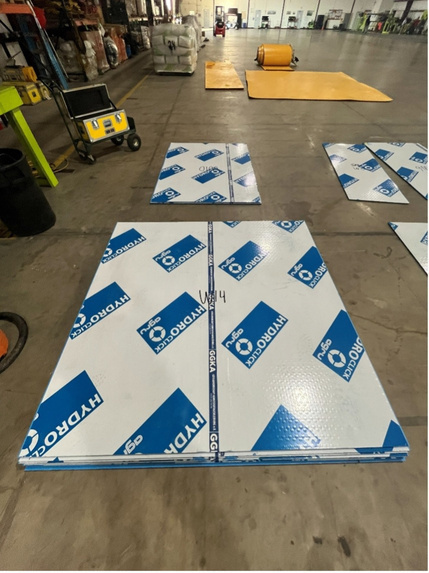
Installation: One of the key advantages of the HYDROCLICK® system is its ease and speed of installation. Traditional geosynthetic lining systems typically require the liner to be placed on forms and encapsulated with grout, a labor-intensive and costly process that can be difficult to perform in confined spaces
|
Spray-applied coatings also require extensive surface preparation and environmental controls, including:
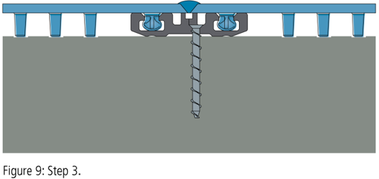
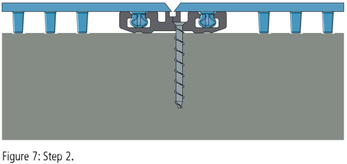
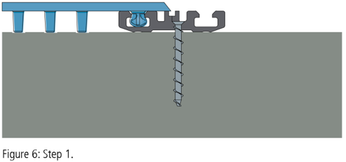
The HYDROCLICK® installation process is significantly simpler:
This simplified process reduces installation time and labor requirements while minimizing tank downtime, making HYDROCLICK® particularly advantageous for confined-space applications where access is limited. |
|
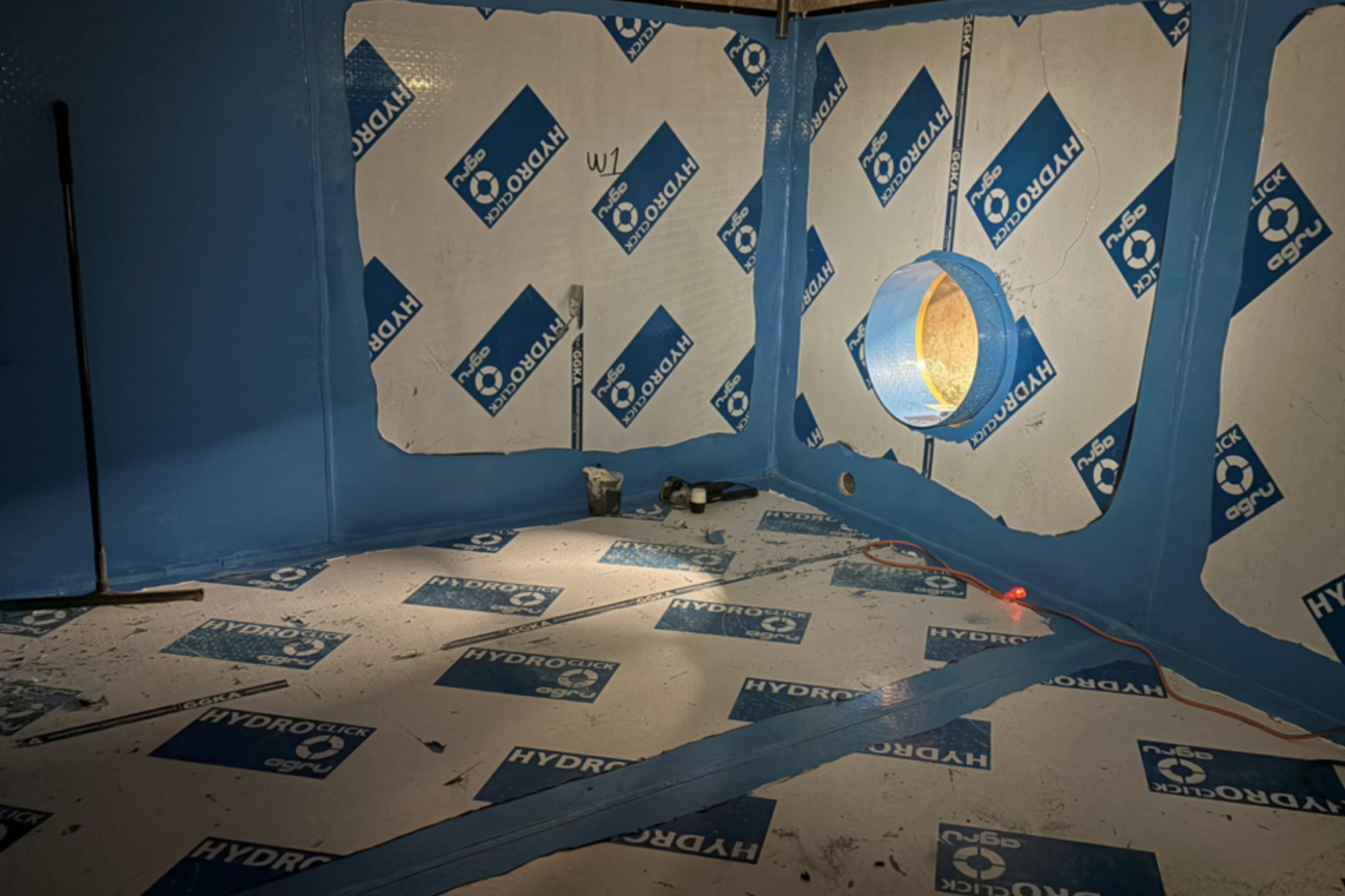
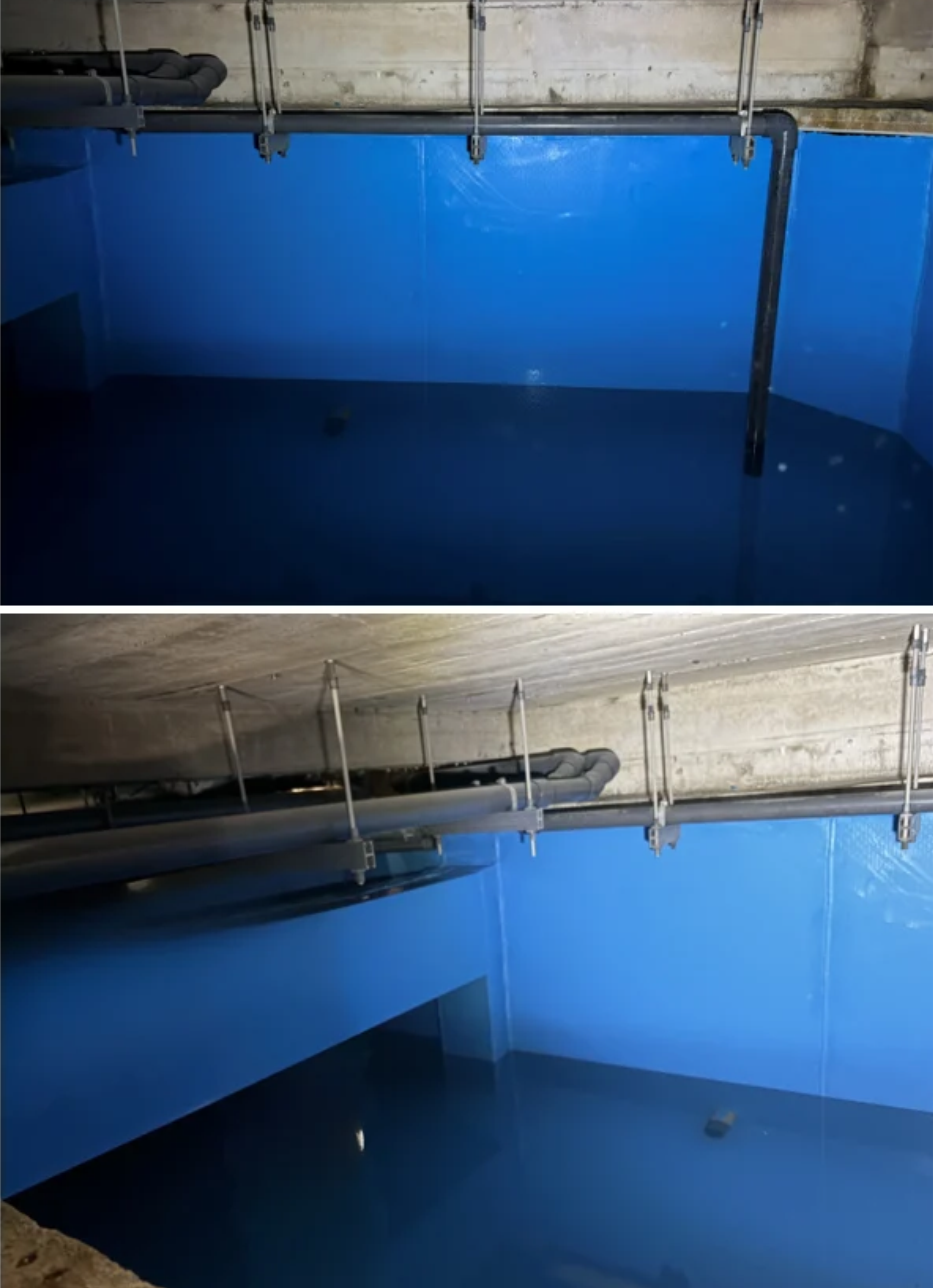
ACHIEVEMENT:The off-site prefabrication approach reduced on-site installation time by several weeks, allowing the primary make-up water tanks to return to service sooner. The HYDROCLICK® lining system protects the underlying concrete while providing a water-contact surface that does not leach metals or other harmful substances and does not affect pH or alkalinity. By eliminating the need for acid etching, HYDROCLICK® also removes a traditional tank-preparation step used to address calcium hydroxide leaching from bare concrete. For aquaculture operators, this means a potentially simpler, faster and more cost-effective path to rehabilitating tanks. The project demonstrates how Titan can combine specialized liner technology, digital measurement, custom panel design, off-site fabrication and installation to address the distinct requirements of aquariums, oceanariums and other marine-life facilities. |
|
Ready to protect your concrete tanks?